

Inside the first Arctic Monkeys album with Alan Smyth
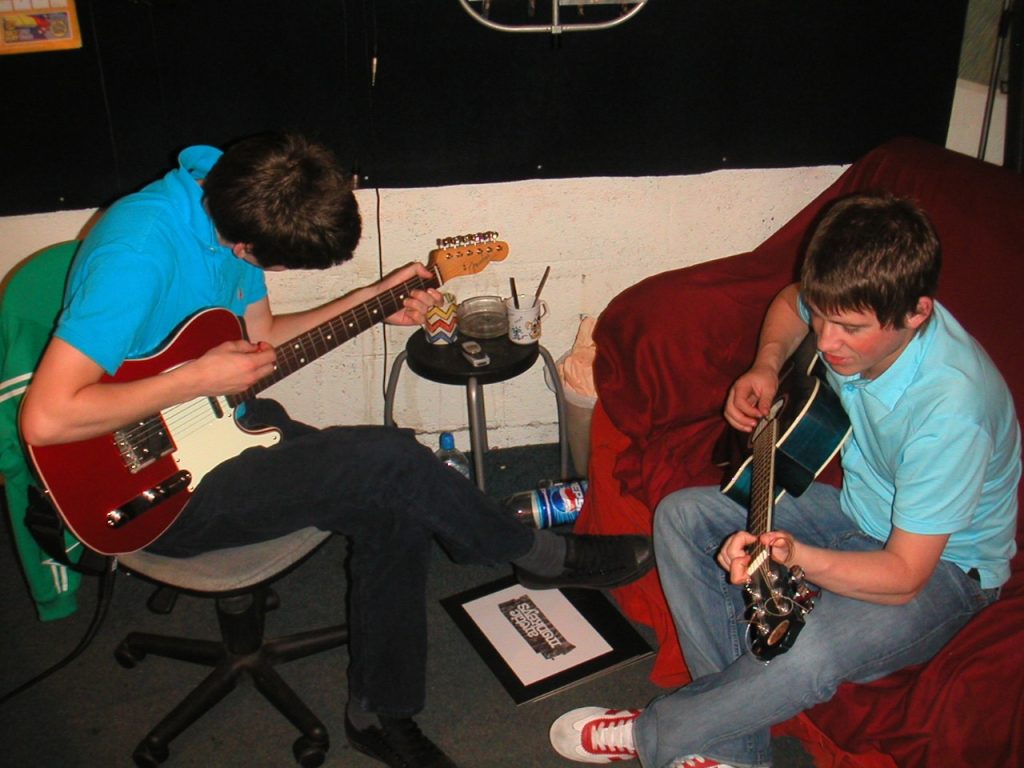
Behind an unsuspecting door in Sheffield City Centre lies 2Fly studios, the birthplace of many of Sheffield’s (and the world’s) greatest bands. Home to Alan Smyth, renowned producer and the mastermind behind Arctic Monkey’s first recordings and tracks from Whatever People Say I Am, That’s What I’m Not, Pulp’s Separations and Reverend and The Makers’ debut, The State of Things, the studio has a history deeply entwined with the biggest indie hits.
It’s the early 2000s, The Office is on the telly for the first time, the first Harry Potter books are being sold, everyone drinks Smirnoff Ice and Alan is sitting behind his mixing desk, awaiting a band called Judan Suki to appear at his door.
The recording goes well, with the three members of the band setting down the basis of what is to be a few singles. As they finish up, the 17-year-old singer appears in the doorway to the booth.
'He popped his head round the door,' said Alan, 'and said to me, “I’ve really enjoyed the session, but I’m in another band called Arctic Monkeys and we’ve got a gig in Sheffield next week, would you come and see us?”
'So, I thought, well, I can’t see why not. So, I went down to see them at the Boardwalk in Sheffield.'
The singer's name was Alex Turner.
Their performances at The Boardwalk launched the young Arctic Monkeys into a world which had not yet been seen, getting big on the internet. Recordings of their music and shows quickly shot up around early social media sites, making them widely regarded as the first band to "go viral".
Alan liked what he heard and worked on getting them over to the studio, 'The band came into the studio and there was two of them, Alex Turner and Matt Helders. It was going well and everyone was enjoying it, just one of those sessions where everything seemed to click.
'After I listened to it all back during production, I had one of those moments where you feel like you’re on the edge of something really interesting happening.'
Several days after the session, Alan got a call from the future band manager, Geoff Barradale, who was working in A&R at the time.
'I got this call, from Geoff, he would ring every eight weeks or so and ask if I’d heard any good bands worth looking into lately. This time I said “Funny you should say that Geoff, yes I have.”
Alan’s main work on the album came in the form of Mardy Bum, one of the band’s most streamed songs (or if you remember the 2000s and early streaming site, Last.fm, as with over 20 million scrobbles).
The band later soared to the international stars we see them as today, but Alan does recall something that changed shortly after their success.
'When they became successful, it was hideous for me because I had loads of people coming to the studio with music that sounded just like the Arctic Monkeys'.
Alan says he’s a firm believer in artists taking influences, but ultimately creating something new, pushing boundaries, with his piece of advice to all artists:
'You’ve got to try and step forward and always do your own thing'.
Most will agree, a lot of smaller indie bands attempted to replicate the sound of Alex Turner and the rest of the Artic Monkeys’ catalogue. But none have replicated their attitude, grit and wit.
We circle back to that classic advice, be an individual, be creative and push boundaries.
Listen to the full podcast out 24th March on all good streaming platforms.
Follow us on Instagram to stay up to date with all our content.